Misinformation and Disinformation: Detection and Response Strategies for Public Sector and Non-Profit Organizations
Instructor Information
-
 Mike Kujawski has over 20 years of experience as a management consultant, trainer, and professional speaker for government, non-profit, and association clients across Canada and around the globe. He is…
Read full bio
Mike Kujawski has over 20 years of experience as a management consultant, trainer, and professional speaker for government, non-profit, and association clients across Canada and around the globe. He is…
Read full bio
Not seeing what you are looking for? Either contact us, or head to the complete training page.
False and misleading information is increasingly affecting public trust and the ability of government and non-profit organizations to communicate effectively. From unintentional misinformation to coordinated disinformation campaigns, today’s threats are complex, fast-moving, and often difficult to detect. This full-day virtual workshop gives participants a clear understanding of the evolving misinformation landscape, along with practical, evidence-based detection and response strategies for real-world public sector and non-profit settings.
Drawing from real-world examples and the latest research, the session explores how public and non-profit organizations are adapting their approaches to build internal readiness, respond to emerging threats, and maintain public trust in a rapidly changing digital environment.
This workshop is ideal for public sector and non-profit communications, marketing, and digital engagement professionals who want to better understand the misinformation landscape and strengthen their organization’s ability to detect and respond to it. It is well suited for those who are new to the topic and looking for a solid foundation, as well as experienced communicators who want to update their knowledge and explore practical strategies they can apply within their own context.
In this interactive workshop, participants will learn how to:
- Recognize the spectrum of false information, from unintentional misinformation to coordinated disinformation.
- Identify key manipulation tactics, including deepfakes, shallowfakes, content recombination, and false context.
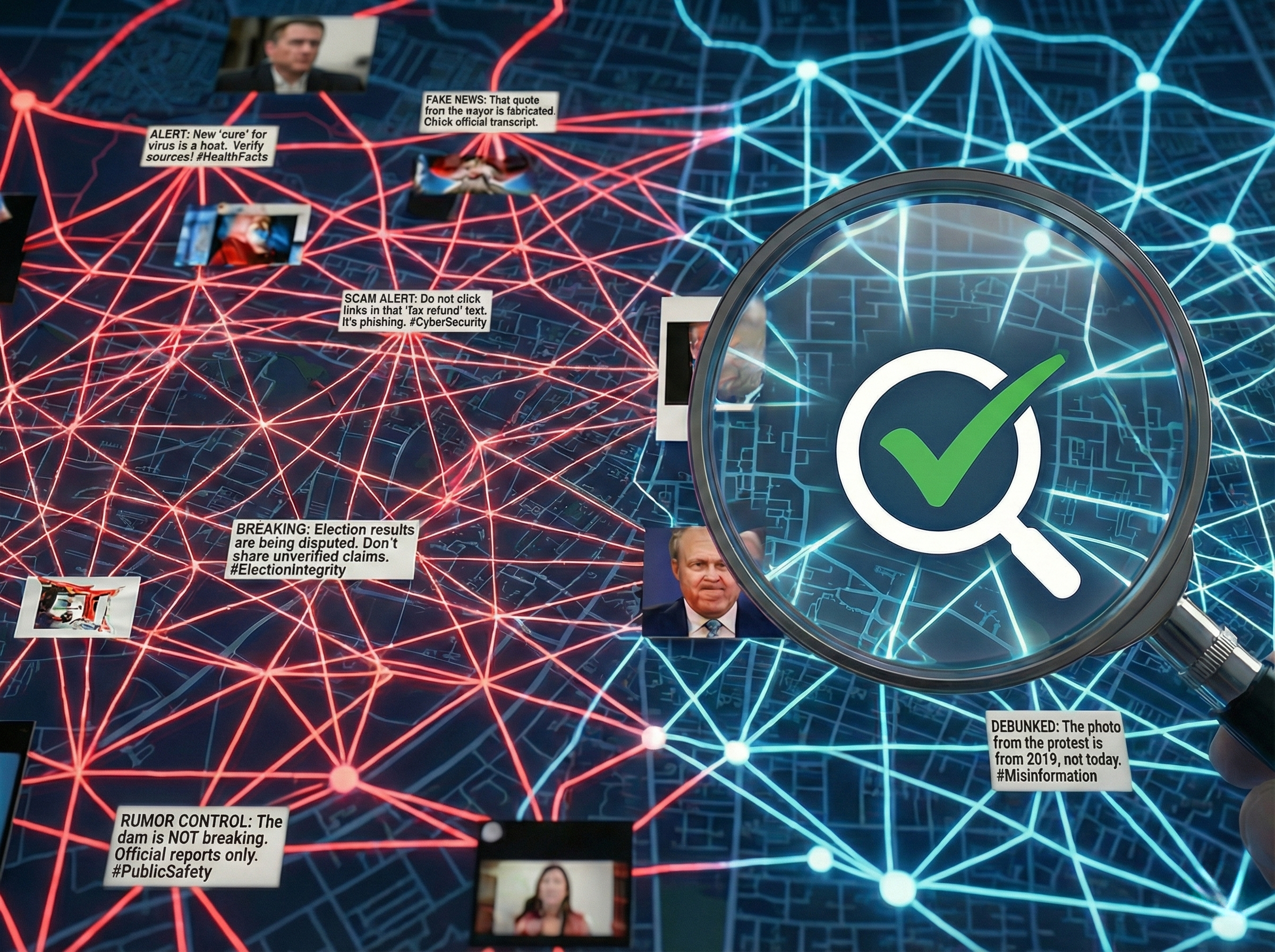
- Use social media intelligence (SOCMINT) and social network analysis (SNA) to detect sources, amplification patterns, and coordinated bot networks.
- Monitor emerging narratives and apply inoculation, prebunking, and related strategies to reduce impact and strengthen public resilience.
- Apply a rapid response framework to decide when to respond, when to stay silent, how quickly to act, and who should speak on behalf of your organization.
- Identify and work with trusted messengers and third-party validators to amplify corrections and build credibility with specific audiences.
- Communicate with a clear, human tone that builds trust and improves public response to corrections.
- Recognize the growing role of AI fact-checking tools like Grok on social platforms, and why their inconsistencies and bias risks matter for communicators.
- Understand platform features like X’s and Meta’s Community Notes, and what the shift toward participatory moderation models means for communicators.
- Apply content authenticity initiatives, including the open C2PA standard and Google’s SynthID watermarking technology.
- Navigate generative AI search and zero-click content delivery, and understand why trustworthy sources and content structure matter for generative search optimization.
- Measure the effectiveness of your response efforts by tracking narrative spread and evaluating the impact of counter-messaging over time.
- Build internal governance structures, escalation paths, and digital literacy programs to strengthen your organization’s overall misinformation resilience.
- Understand the current Canadian regulatory and policy landscape, including recent foreign interference findings and the evolving obligations of platforms and public institutions.
- Draw on examples of how different public sector and non-profit organizations have addressed misinformation using evolving styles and techniques over time.
- A copy of the workshop presentation slides
- Workshop notes and/or mindmaps developed during the interactive exercises
- An official CEPSM Certificate of Completion